Big Mushrooms, Big Stories
Why Rhode Island Is Ready for a State Mushroom
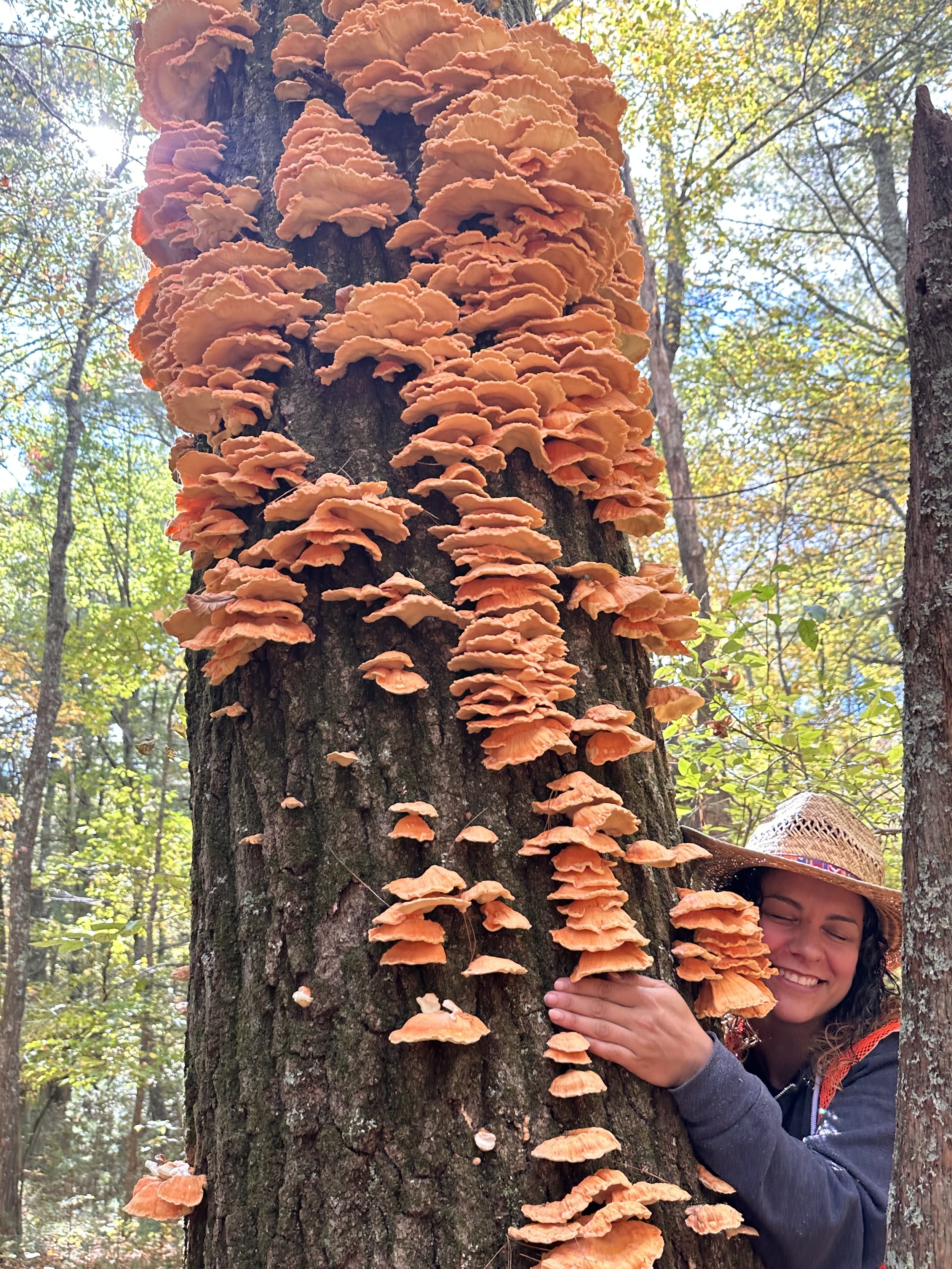
A Community Call to Imagine Rhode Island’s State Mushroom
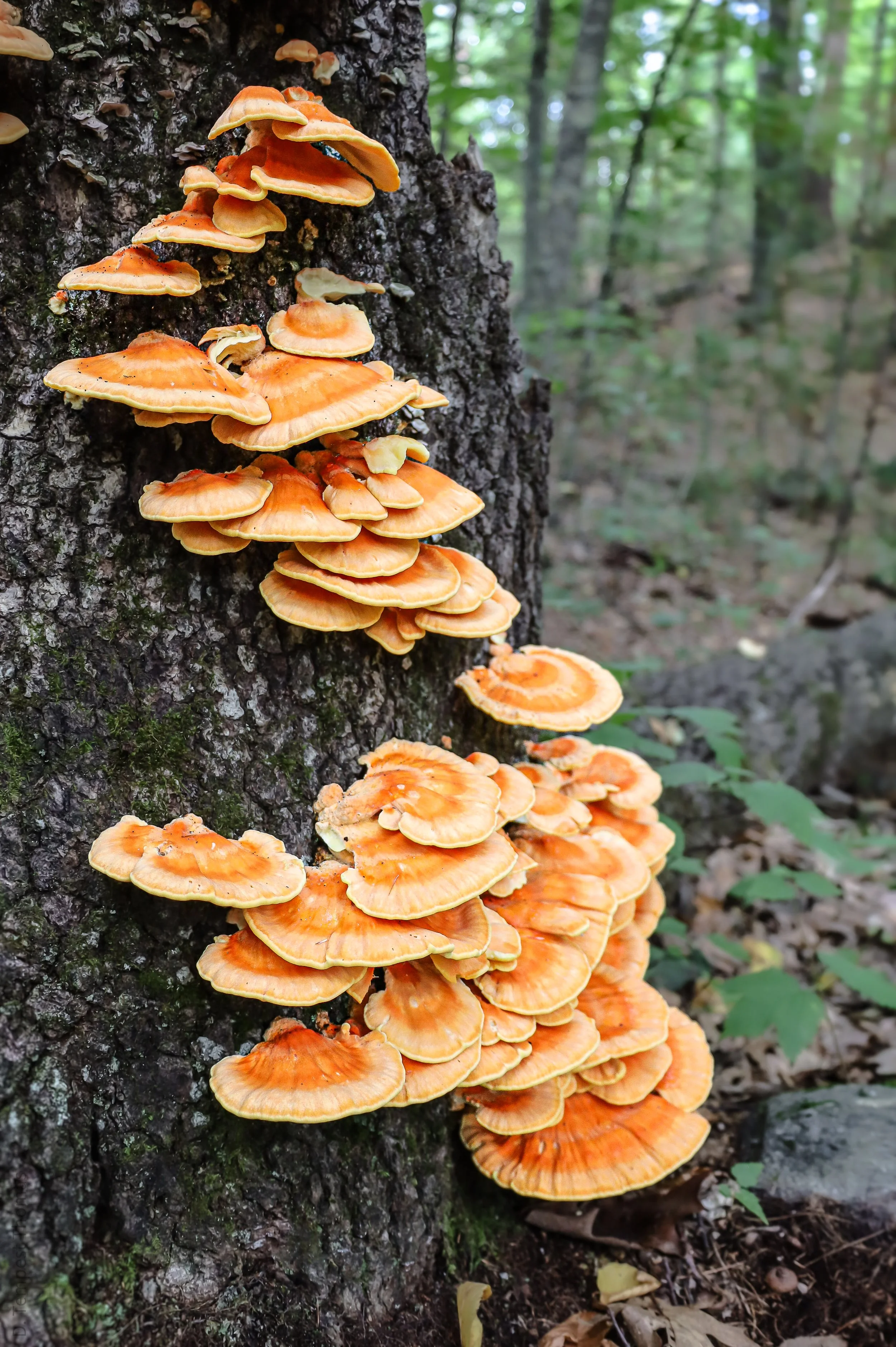
In Rhode Island, there’s a mushroom so big and bright it stands out. It grows in yards, along roads, and in forests.
You don’t need to know anything about mushrooms to notice it, and you don’t have to go looking for it to find it.
A Symbol That Helps Us Learn
State symbols tell stories about who we are and what we value.
A state mushroom celebrates our shared connections to outdoor spaces and local knowledge.
It honors Rhode Island's fungi.
There is currently no state symbol representing fungi, despite their essential role in ecosystems.
Rhode Island already recognizes many parts of its natural and cultural heritage through official state symbols, including the
Rhode Island Red (state bird),
Red maple (state tree),
Violet (state flower),
Rhode Island Greening apple (state fruit)
Striped bass (state fish)
Quahog (state shell)
American burying beetle (state insect)
Harbor seal (state marine mammal)
Cumberlandite (state rock)
These symbols reflect the state’s landscapes, industries, and everyday connections to the natural world.
Why Chicken of the Woods?
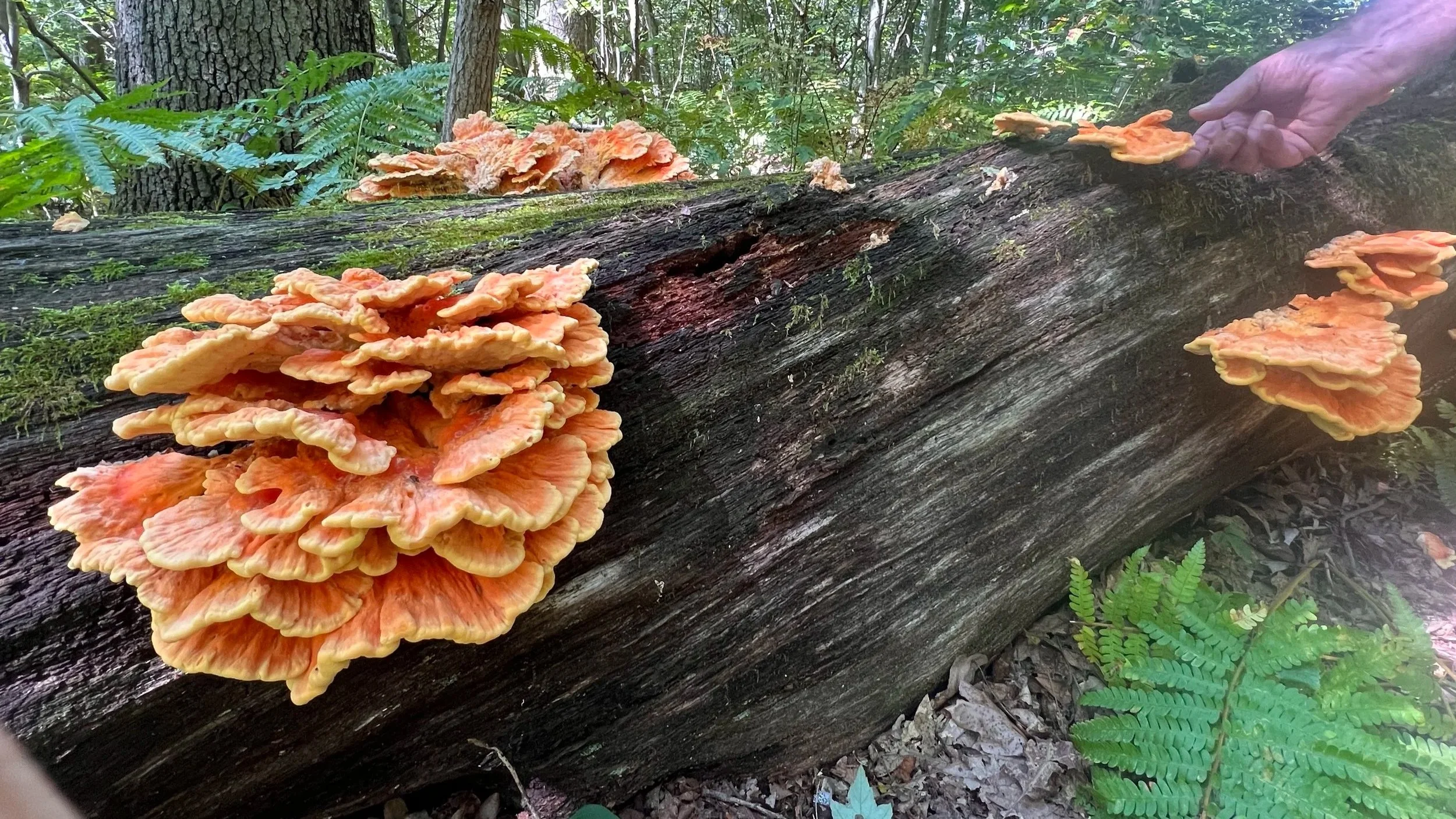
Chicken of the Woods makes sense as a state mushroom because it meets the same criteria used for other symbols:
Local – Common in Rhode Island hardwood forests.
Recognizable – Bright, distinctive, widely known.
Relevant – Linked to common local trees, seasonal cycles, ecological and cultural processes.
Families have noticed this mushroom for generations . It is part of a shared outdoor experience.
This designation would not regulate land use.
It would not change any environmental rules.
It would recognize fungi as part of Rhode Island’s identity.
It’s a mushroom people recognize, talk about, and remember.
State symbols
Designating a state mushroom would complement existing symbols by recognizing an ecologically important and vast kingdom of life that is currently unrepresented.
A state mushroom gives teachers a way to introduce forest ecology.
It gives families a reason to look more closely at trees.
It gives communities language for an overlooked part of biodiversity.
Symbols shape attention. Attention shapes care.
Recognizing a mushroom signals that forests are more than trees and that ecosystems include organisms many people have never been taught to notice.
Why This Is Good for Rhode Island
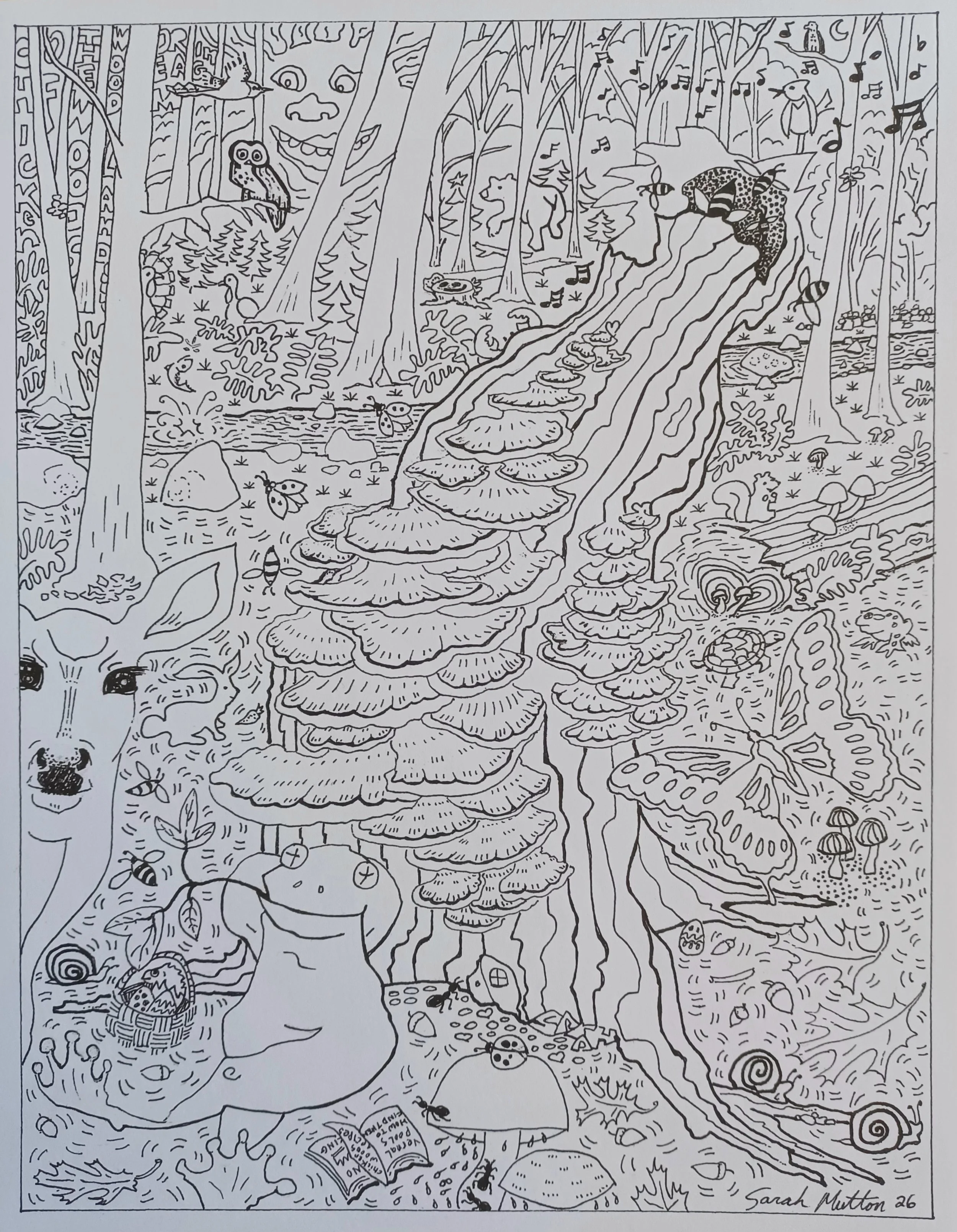
WINNING ARTWORK from Fungi Fair
Artist Sarah Mutton won first place with this amazing coloring page!

Our friends at Mushroom Marauder are helping raise awareness with their Chicken of the Woods merch!
For decades, The Providence Journal has documented Rhode Islanders finding enormous wild mushrooms—often in fall—across Rhode Island.
From the 1930s through the 1990s, the paper ran photo stories of mushrooms weighing 20, 40, even 60+ pounds, often found by families and shared with neighbors. Many of these images feature Hen of the Woods, showing how deeply mushrooms are woven into Rhode Island’s seasonal culture and community memory.
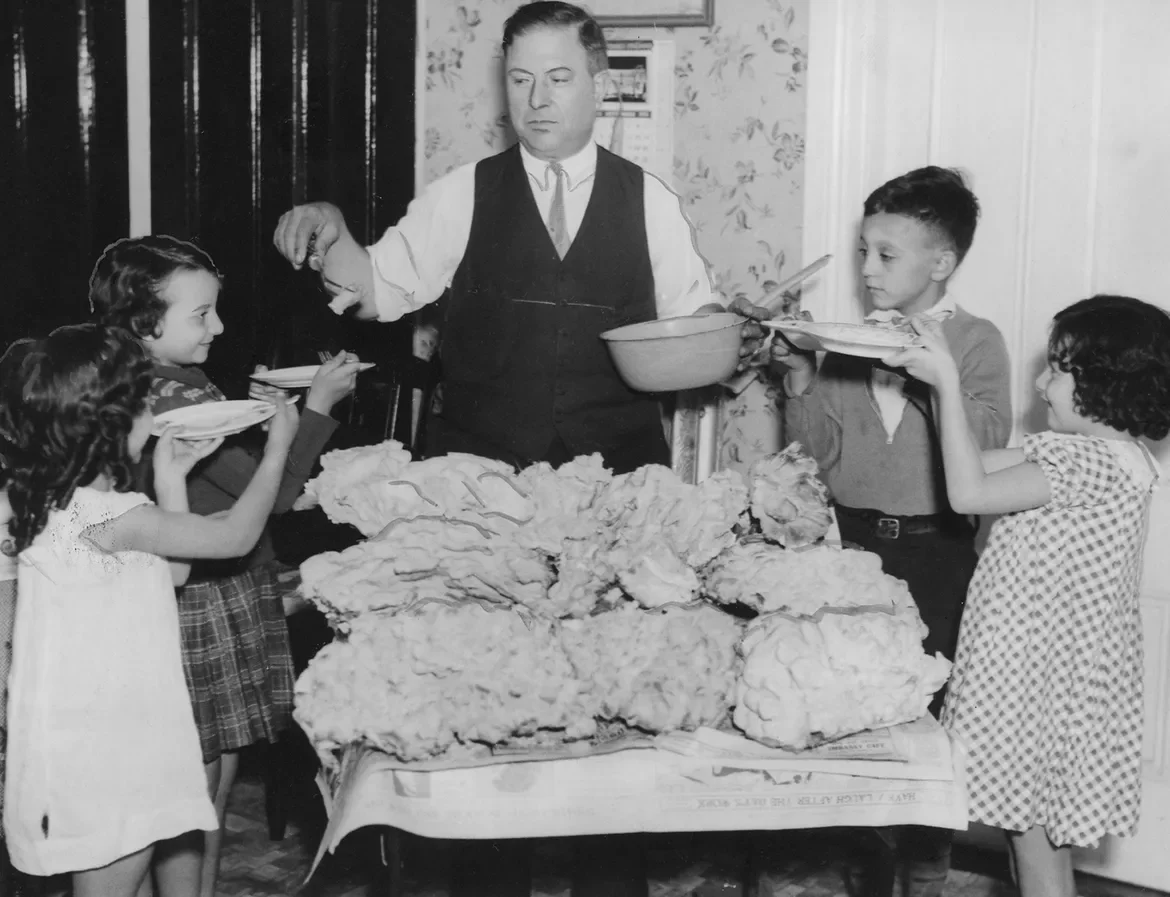
1935: Because this mushroom is so large, Mike Morso, of Providence, is distributing some of it to a few youngsters in the neighborhood. In case you're curious, all that amorphous stuff on the table is a single mushroom from the woods in Lakewood. A "king" mushroom, Mr. Morso calls it, and it weighs 52 pounds. Because this picture is a study in black and white, we can't show you why this growth looks like ladies' fingers sunk in whipped cream — take our word for it, though, it does. The Providence Journal Files
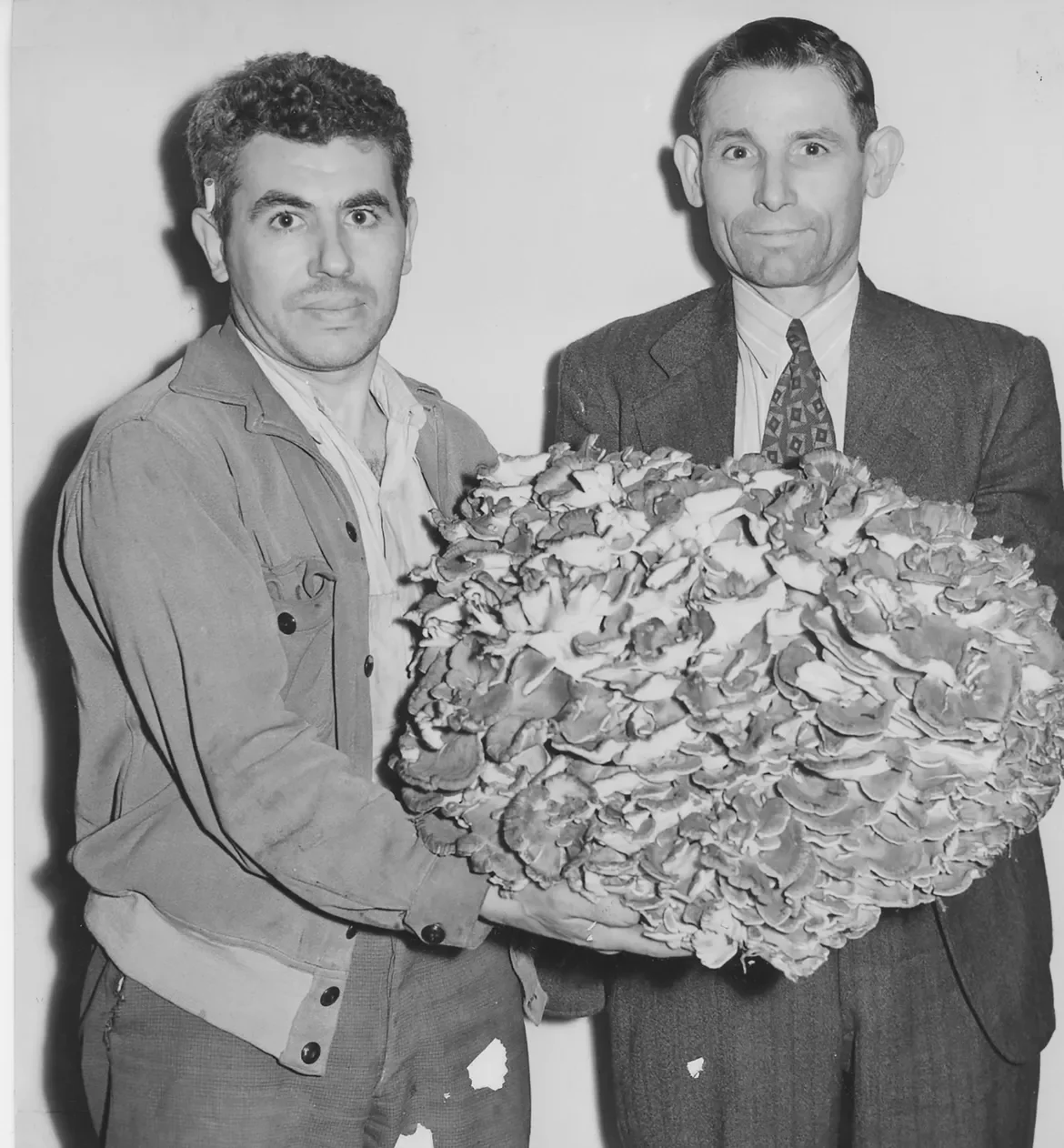
1939: Although critical and gastronomical opinion was divided, there was no doubt in the mind of Joseph Romano, right, that (a) his prize find was a mushroom and (b) it would prove a tasty dish. He and Eugene Savastano, who is helping support his prize, found the mushroom in the woods at Foster Centre. The Providence Journal, Files
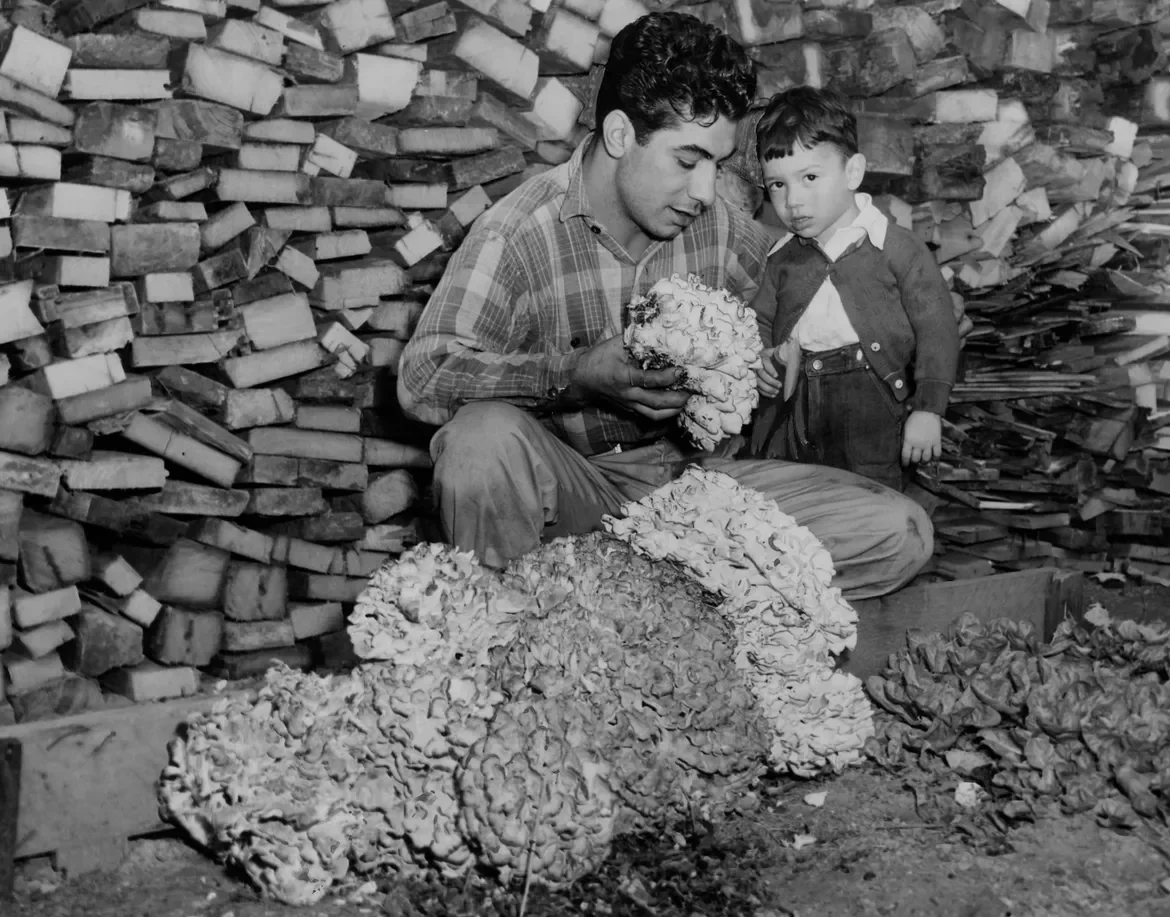
1949: Good to eat — all 40 pounds of it. Bennedetto Rossi, 21, who found the giant mushroom in Exeter, shows it to his nephew, Salvatore Marciello, 2. The Providence Journal, File
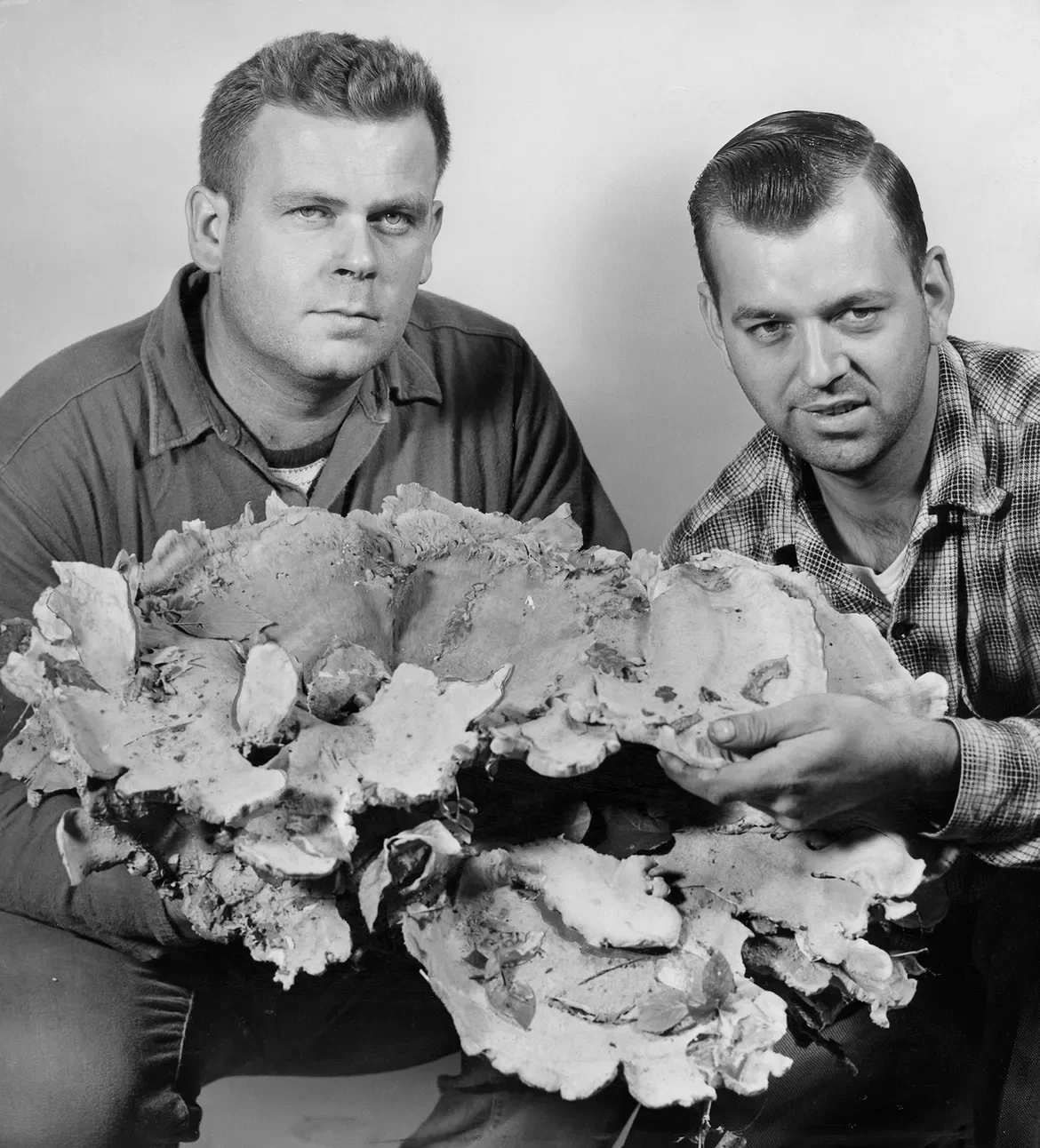
1955: Milton Yeaw, left, and Earl J. Thomas of North Scituate picked one mushroom weighing 22½ pounds and another 7½-pounder in woods of the town. They wouldn't say where in the woods — that's a mushroom picker's secret. The Providence Journal, File
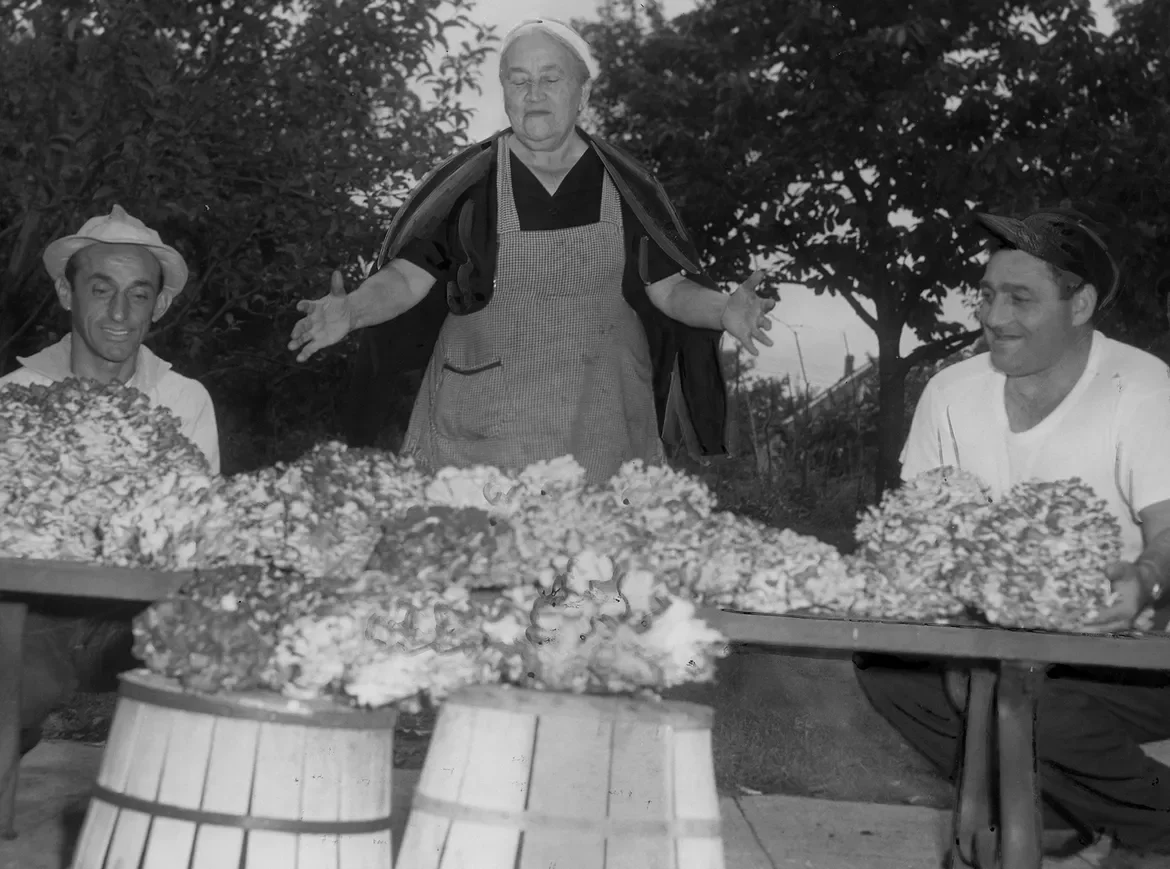
1958: Mrs. Rose Razza, of Natick, expresses delight with the large quantity of mushrooms found by her son, Patrolman Joseph Razz, right, of the West Warwick police, and Mike Sacchetti in Scituate woods. The men estimate they have more than 300 pounds of mushrooms here. The Providence Journal, File
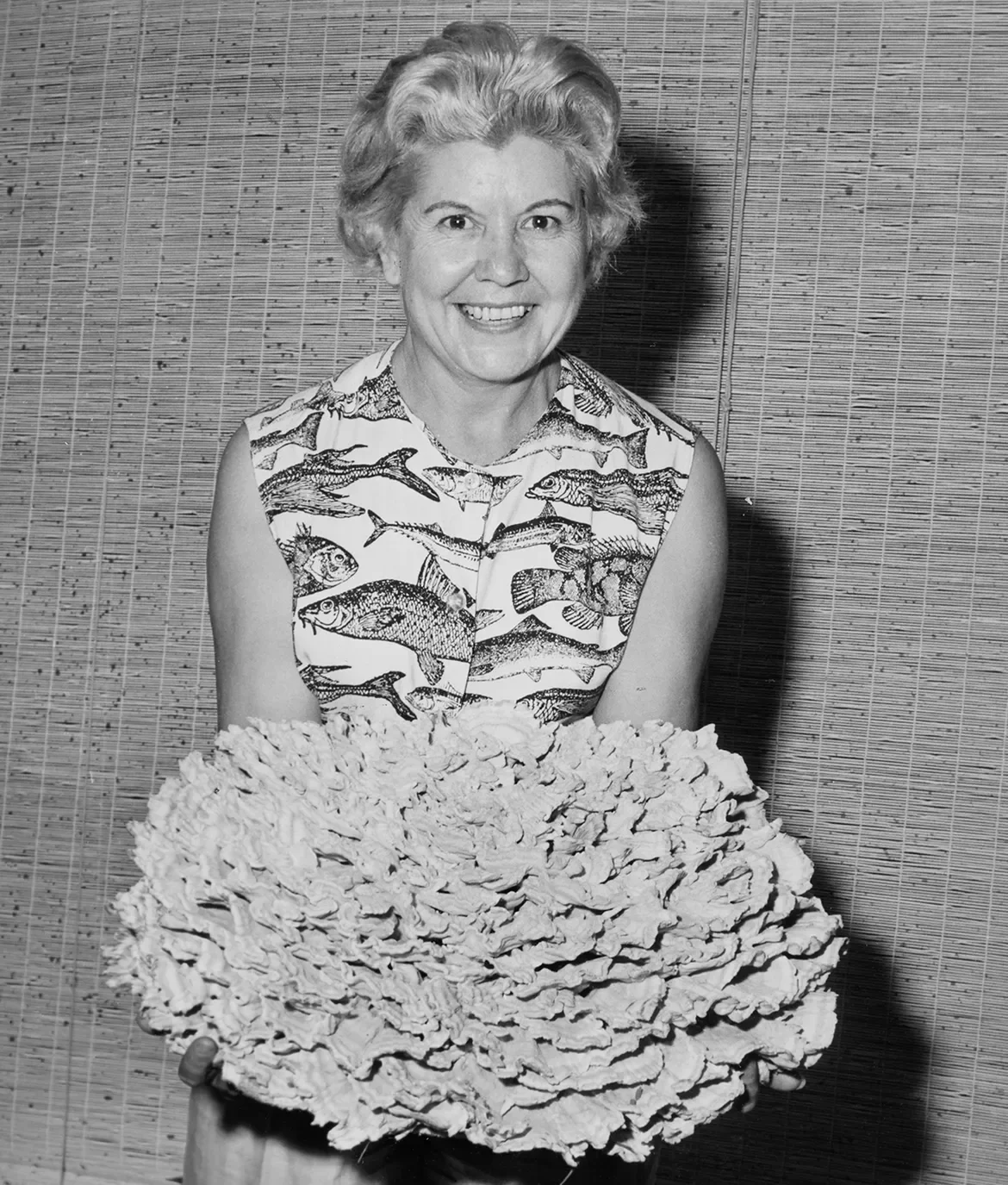
1964: Joseph Guzeika, of North Kingstown, has been hunting mushrooms far and near for 40 years. But the biggest one he ever saw was found practically in his backyard. And his wife found it. Known as "oyster mushroom" because of its resemblance to a bed of oysters, the salmon-colored specimen Mrs. Guzeika found under an oak tree was more than 2 feet across and weighed 32 pounds — even after about a third of it had been sliced off by Mr. Guzeika as a present to a neighbor who helped him identify it. The Providence Journal, File
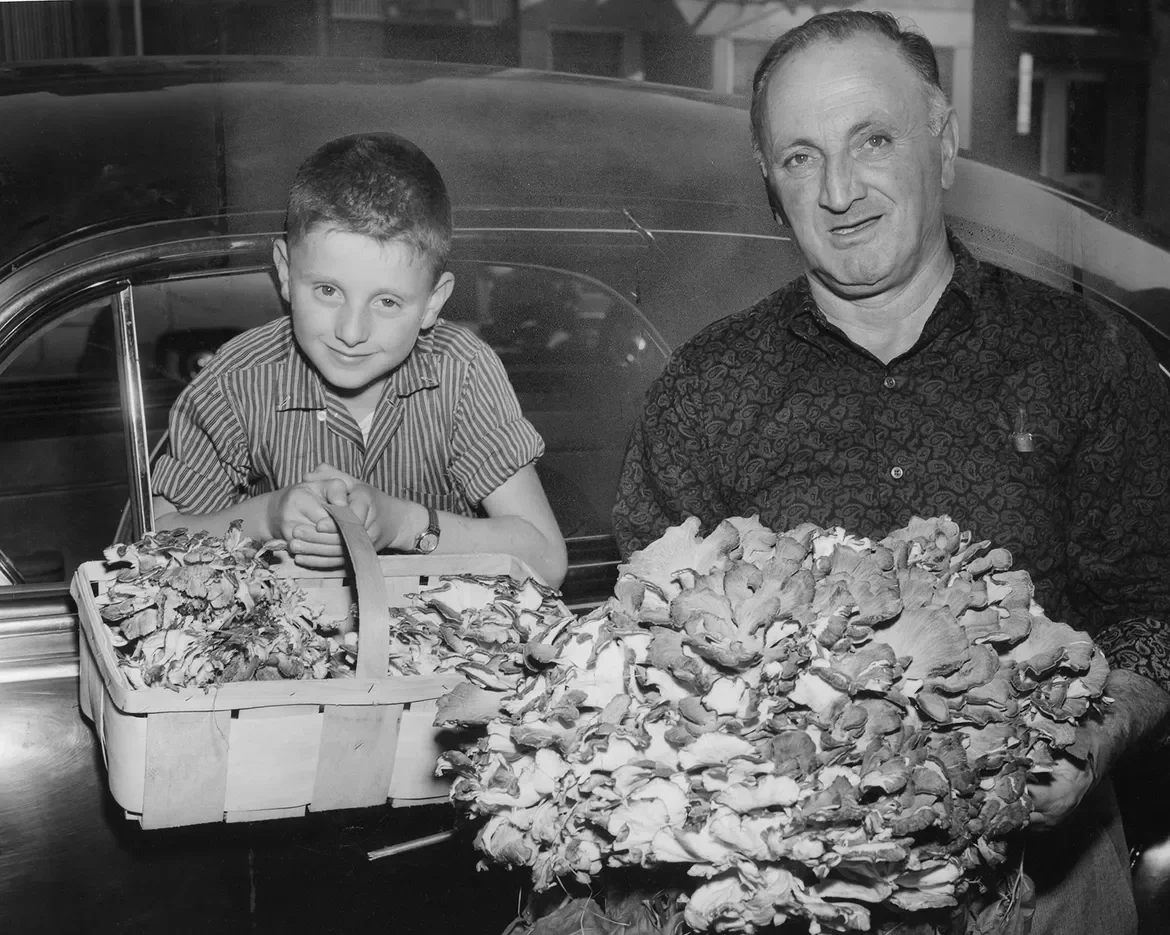
1959: Rhode Island's Italian-Americans delight in "catching" giant mushrooms. Mushrooms catchers are just as quiet as fisherman about where they got the "big one." Anthony Marro, of Providence, and his grandson, John Papa, 10, grabbed a monster, a signorina weighing 52 pounds. Mr. Marro made a technical blunder afterward and told a Journal-Bulletin photographer where he found it. These newspapers have decided to withhold the information. It is estimated that it will take 250 pounds of steak to support the mushrooms when it is served. The Providence Journal, File
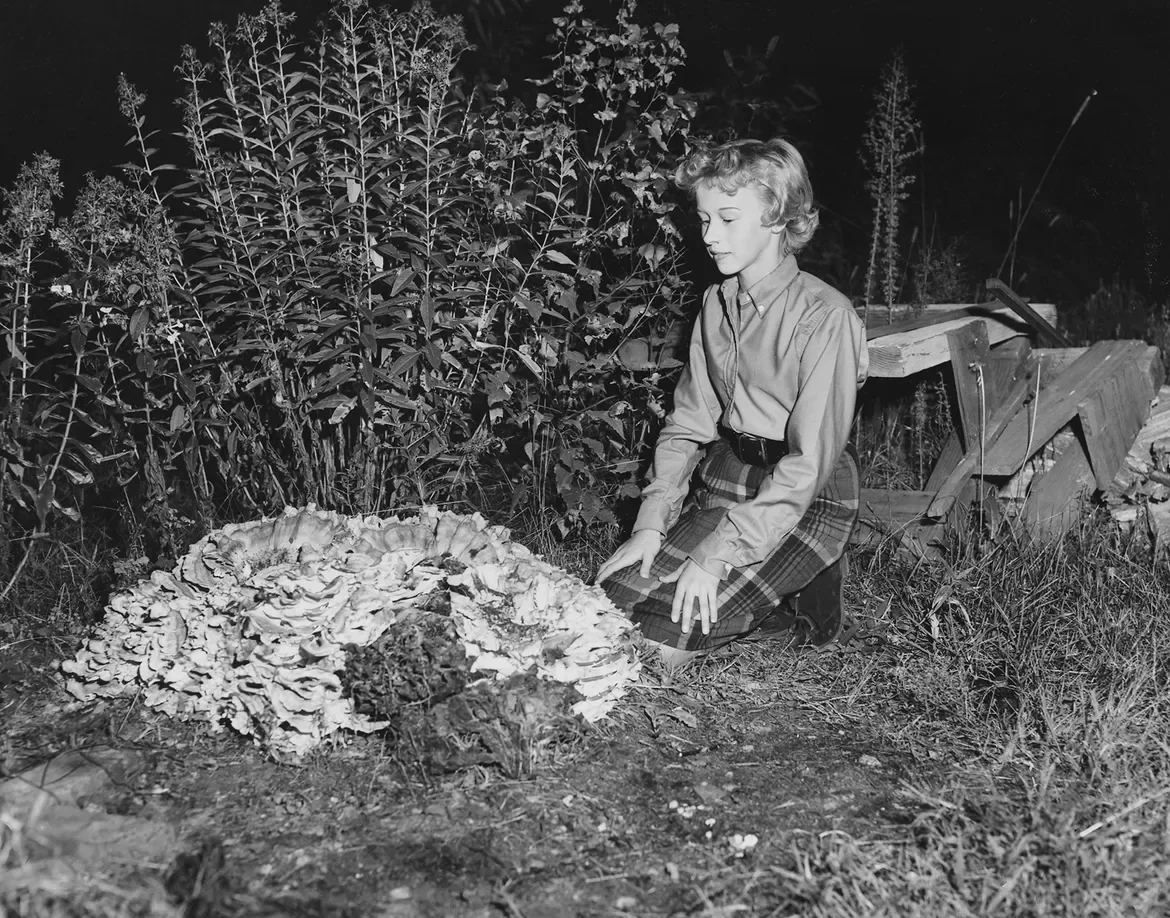
Wouldn't you know, she doesn't like mushrooms. This huge specimen is growing in the yard of Sherrill Nelson, 13, daughter of Councilman and Mrs. Kenneth J. Nelson of Cranston. They don't like mushrooms either. The Providence Journal, File
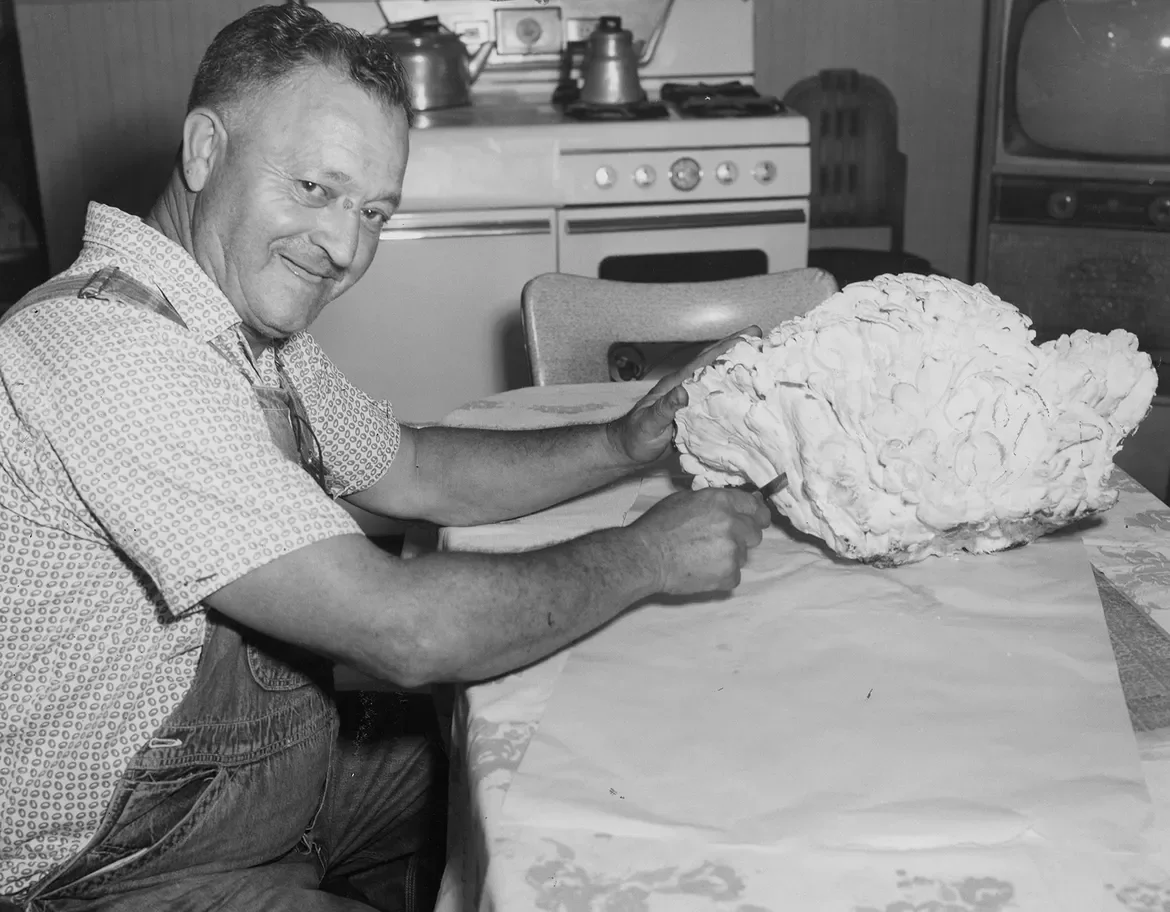
1963: After picking mushrooms for 20 years, Emilio De Frazio, of Johnston, found this 21-pound coral specimen growing on the trunk of an ash tree in woods off Foster and Center Road, Scituate. Now he's looking for a 100-pound steak. The Providence Journal, File
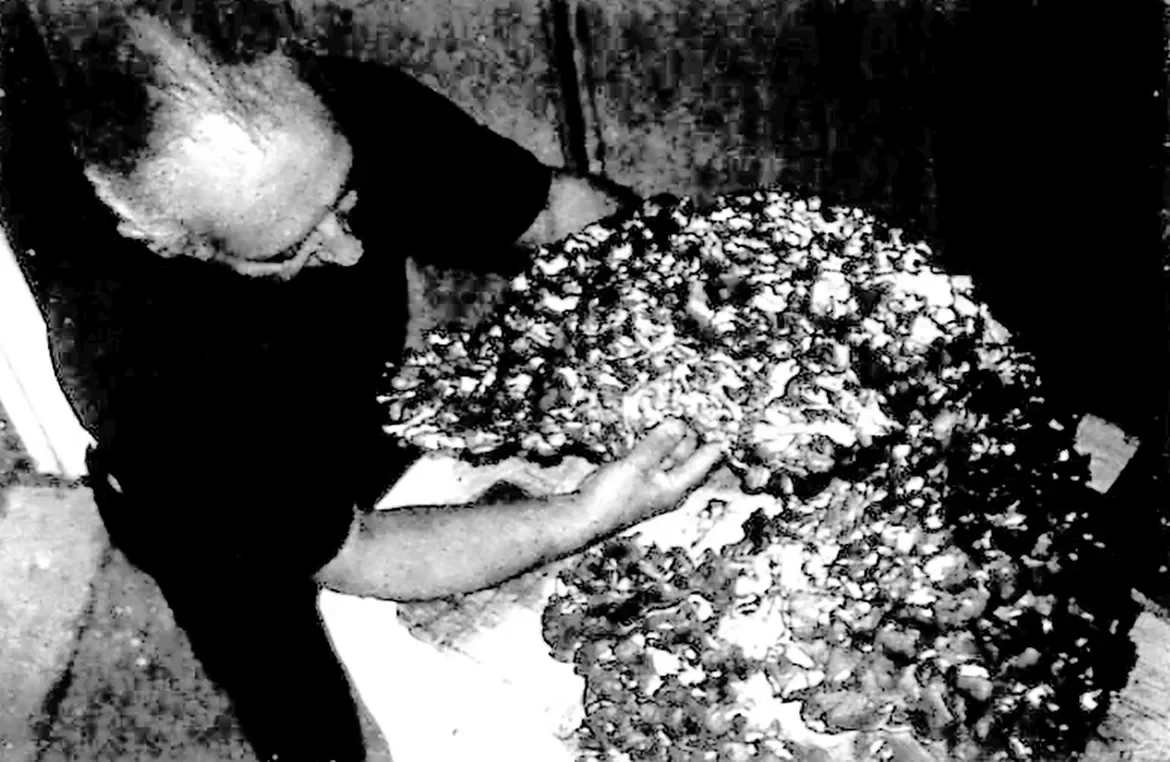
Bruno Iacovone, of Johnston, fits together two pieces of a 62-pound hen of the woods mushroom he discovered near the Rhode Island-Massachusetts border in 1998. The common name for the mushroom among Italian-Americans in Rhode Island is the signorina. The Providence Journal, File